Fix Dense Bread Forever With This Flour Guide
In the heritage kitchens of Sicily, we don't just "measure" flour; we respect it. To the untrained eye, flour is a white powder. To an artisan, it is a living biological variable. If you've ever wondered why your Panettone didn't reach the heavens or why your Focaccia felt like a brick, the answer is usually hidden in the milling code.
Today, I’m taking you deep into the science of the Italian grain. We’re moving beyond the "all-purpose" label and into the world of extraction rates and the legendary W index.
The Extraction Code: From 00 to Integrale
In Italy, we classify flour by its extraction rate—essentially, how much of the original grain remains after milling. This is measured by the ash content (mineral residue).
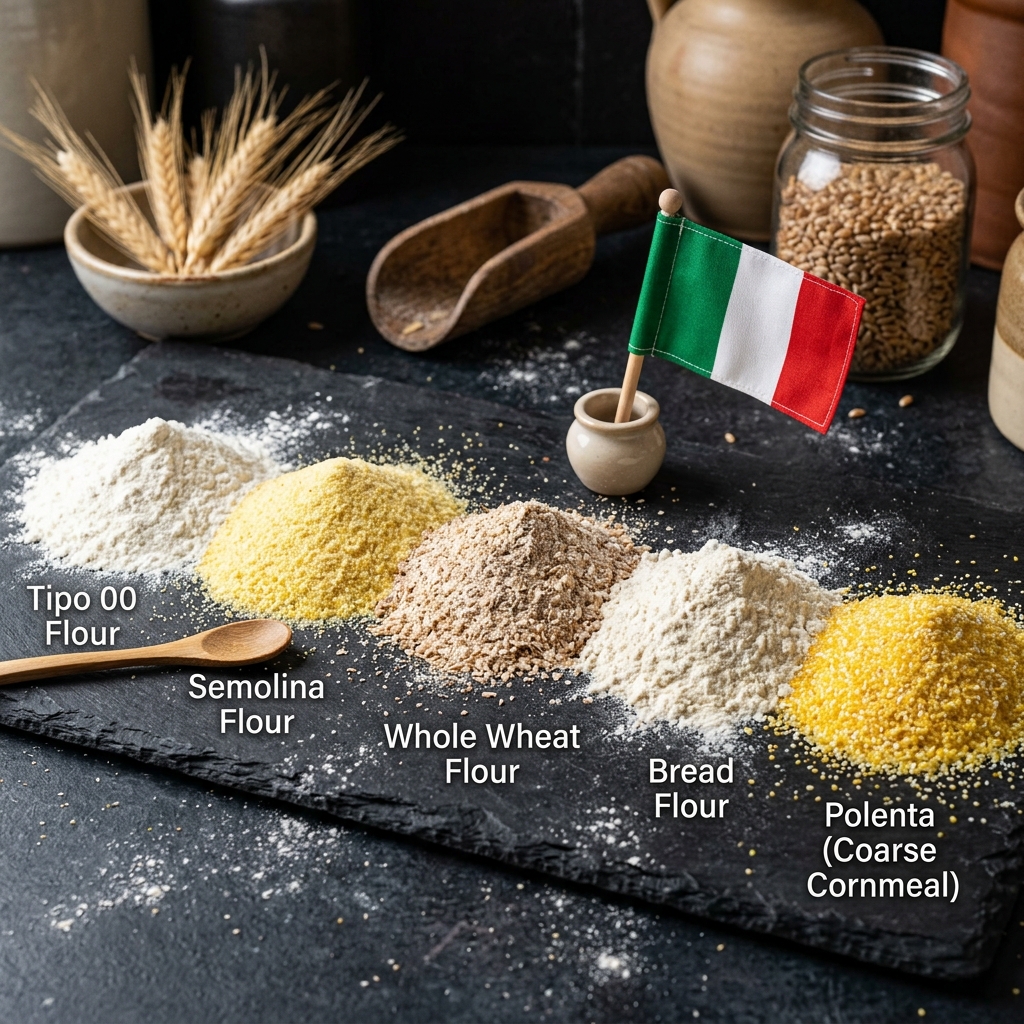
- Tipo 00 (Double Zero): The finest grind. The heart of the endosperm. It has the lowest ash content and produces the silkiest dough. Perfect for pasta and delicate cakes.
- Tipo 0 (Zero): Slightly less refined, with more of the grain's protein and minerals. This is the workhorse of the Italian bakery.
- Tipo 1 & Tipo 2: These are "semi-integral" flours. They contain more germ and bran, offering a deep, nutty aroma and superior nutritional profile.
- Integrale: Whole wheat. The entire grain is present, offering maximum flavor but requiring a completely different hydration strategy.
"Mamma's Pro Tip: Never judge a flour by its protein percentage alone. A high-protein flour from soft wheat will behave differently than a medium-protein flour from hard wheat. Always look for the W index."
The Ghost in the Machine: Understanding the W Index
If you want to bake like a professional, you must understand Strength (W). In Italy, the W index tells us the "baking strength"—the ability of the dough to resist pressure and hold gases during long fermentations.
- W 90 - 170 (Weak): For biscuits, shortbread, and waffles. Low gluten potential.
- W 180 - 250 (Medium): For direct-dough pizzas, bread with short leavening (4-6 hours), and focaccia.
- W 260 - 350 (Strong): This is where heritage baking lives. Required for sourdough, long-fermented pizza (24-48 hours), and enriched doughs like Brioche.
- W 350+ (Manitoba): Known as "Farina di Forza." This is the engine for Panettone and Pandoro. It can handle massive amounts of butter and egg yolks without collapsing.
The Manitoba Mystery
"Manitoba" refers to a type of "strong" flour originally from Canada, characterized by very high protein and water absorption. Today, any flour with a W index over 350 is often colloquially called Manitoba in Italy.
If you are attempting a Lievito Madre (Sourdough Starter) or high-hydration ciabatta, you must use a flour with at least a portion of Manitoba to provide the structural skeleton needed for those long, slow bubbles.
Flour Science & Hydration
Understanding your flour is the key to mastering hydration:
- Tipo 00 typically absorbs 55% to 65% of its weight in water.
- Tipo 1 & 2 can handle 70% to 85% because the bran acts like a sponge.
- Manitoba can push beyond 80% for artisan sourdough.
The Ultimate Lievito Madre Calculator
Most calculators ignore the water inside your sourdough starter. Our utility calculates True Dough Hydration by breaking down your Lievito Madre or Liquid Levain.
Base Formula
Sourdough Starter (Levain)
True Breakdown
Classic dough. Identical to Mamma Rosa's daily rustic loaves.
© Dolce Vita Food • Engineering
Free to use — Share to support
Choosing the Right Flour for the Recipe
- For Neapolitan Pizza: Look for a "Tipo 0" or "00" with a W index between 250 and 300.
- For Heritage Sourdough: A blend of 80% Tipo 0 (W 280) and 20% Integrale (Stone Ground) provides the perfect balance of strength and flavor.
- For Fresh Pasta: Always Tipo 00. You want the lowest possible resistance so you can roll the sheets as thin as a translucent silk scarf.
A presto,
Mamma Rosa
The Heritage Science Series
Expand your technical knowledge with our other high-authority artisan guides: