The 72-Hour Neapolitan Pizza Dough Secret You're Missing
The 72-Hour Neapolitan Pizza Dough Secret You're Missing
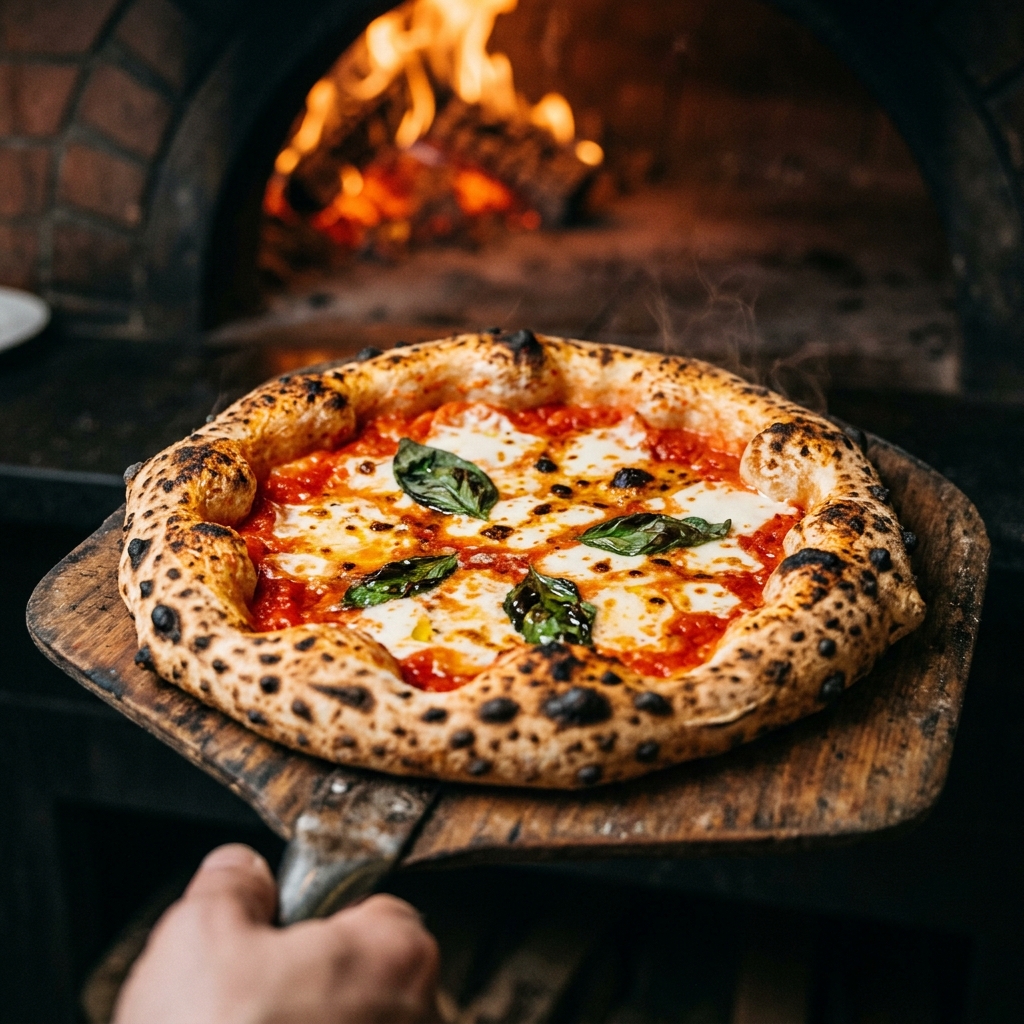
If you've ever eaten a traditional Neapolitan Margherita pizza in Naples, Italy, you know the aesthetic instantly: an ultra-thin, almost soupy center surrounded by a massive, puffy perimeter (the cornicione), painted with dramatic black burn blisters known as "leopard spotting."
Most home bakers attempt to recreate this magic using "quick 2-hour pizza dough" recipes found online. They inevitably end up with pale, dense, flavorless circles that taste like cardboard.
The key to elite pizza isn't a secret ingredient. It isn't even the 900-degree oven (though that helps).
The absolute secret to masterpiece pizza is Time. Specifically: A 72-hour cold fermentation.
The Science of the "Cold Ferment"
When you mix flour, water, salt, and extremely tiny amounts of yeast (or sourdough starter), the biological engine starts running. The yeast begins eating the starches, converting them into carbon dioxide (which creates bubbles) and ethanol (which creates flavor).
If you leave this dough at room temperature (70°F), the yeast works rapidly. The dough doubles in size in just 2 hours, exhaustingly consuming all the available sugars and ruining the gluten matrix. If you bake it now, it'll lack flavor, and without residual sugar, the crust will not brown darkly.
Enter the Refrigerator (Cold Fermentation): By throwing the freshly kneaded dough directly into a 38°F (3°C) refrigerator, we deliberately slow the yeast down to a crawl. But here is the magic: while the yeast slows down, the naturally occurring enzymes in the flour (amylase) continue to break complex starches down into simple sugars at full speed.
Over 72 hours in the fridge:
- Flavor Explosion: The dough develops complex, tangy, alcohol-driven flavor profiles synonymous with elite sourdough bakeries.
- Digestibility: The enzymes completely break down the heavy starches and gluten structures. This is why 72-hour pizza doesn't leave you feeling painfully bloated.
- Leopard Spotting: Because the yeast hasn't eaten them all, the dough is absolutely loaded with residual simple sugars. When these sugars hit a hot oven (the Maillard Reaction), they caramelize instantly, creating those coveted black blisters and ultra-dark crusts.
The Authentic 72-Hour Master Recipe
To execute this, you need "00" (Double Zero) flour. It is milled finer than standard bread flour and handles high heat beautifully without burning prematurely.
The Formula (65% Hydration):
- 1000g Type "00" Flour
- 650g Cold Water (using cold water prevents the yeast from waking up too fast)
- 30g Fine Sea Salt
- 2g Active Dry Yeast (or 100g Sourdough Starter)
Execution Day 1 (The Mix)
- Dissolve the salt entirely in the cold water.
- Add the yeast, then slowly whisk in the flour.
- Knead vigorously for 10-15 minutes until the dough passes the "windowpane test." It should be incredibly smooth and slightly tacky.
- Place the entire mass into an airtight, lightly oiled container.
- Put it straight into the back of your refrigerator. Do not let it rise on the counter first. Let it sleep for 48 hours.
Execution Day 3 (The Balling)
- After 48 hours, pull the massive block of dough from the fridge. It should have slowly doubled in size.
- Divide the cold dough into 250g portions.
- Form each portion into a tight, seamless ball. This creates the surface tension necessary for a puffy crust.
- Place the balls into a lightly oiled proofing tray, cover tightly, and place back into the fridge for the final 24 hours.
Execution Day 4 (The Bake)
- Pull the dough balls from the fridge 2 hours before you plan to bake. They need to return to room temperature. If you stretch cold dough, the gluten will snap and tear.
- Preheat your oven to its maximum temperature (500°F - 550°F) with a Pizza Stone or Baking Steel inside for at least 1 hour.
- Gently dump a dough ball into a bowl of semolina flour. Press from the center outward to push the gases into the outer rim (the cornicione). Never use a rolling pin!
- Top lightly with crushed San Marzano tomatoes, fresh basil, and fresh mozzarella.
- Launch onto the 550°F steel and bake for 4-6 minutes.
The resulting pizza will blow the doors off almost any pizzeria in your city, boasting an impossibly light structure, deep flavor, and aggressive blistering. Time is the ultimate ingredient!