Heritage Baking: The Ultimate Guide to Ancient Durum
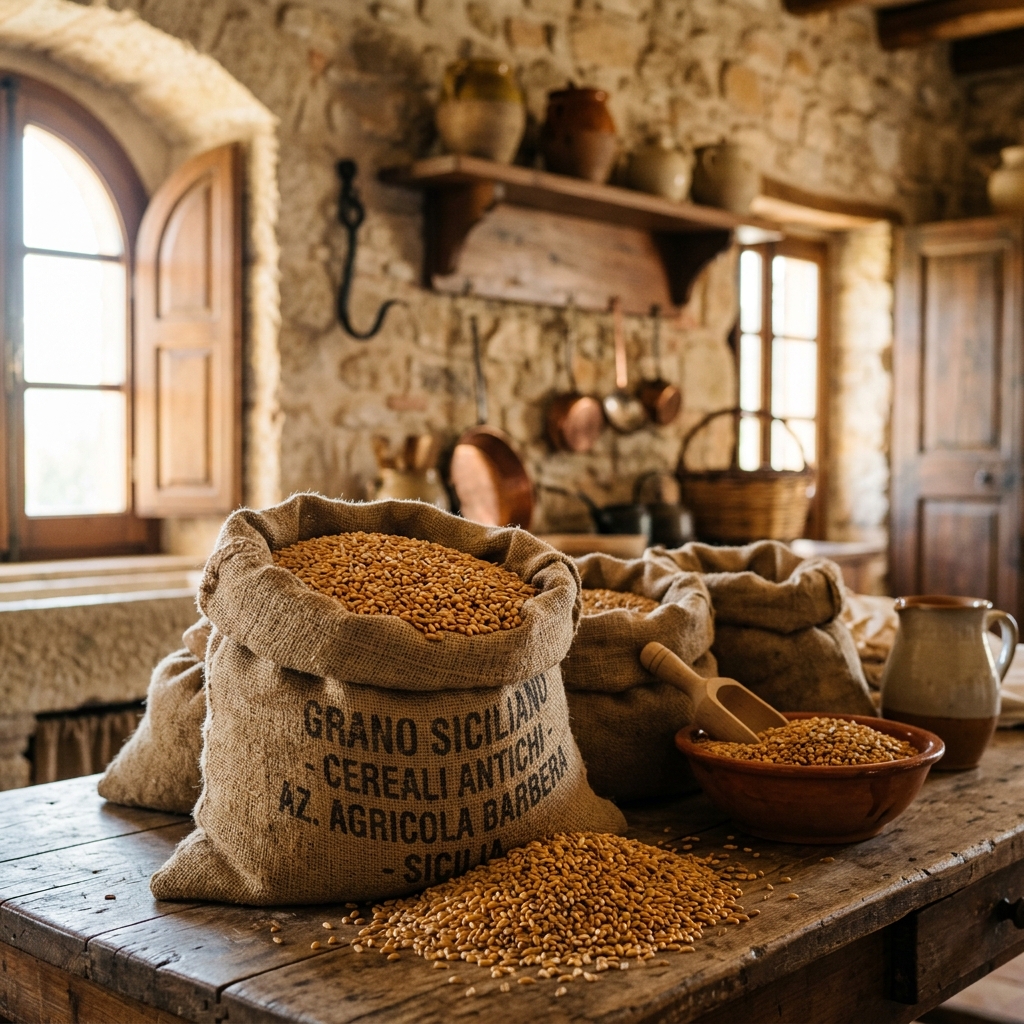
In the sun-drenched fields of central Sicily, a revolution is occurring—or rather, a restoration. For decades, modern high-yield wheat pushed out the ancestral seeds of our grandfathers. But today, the "Ancient Sacks" are returning to our ovens.
If you are a serious baker, you’ve likely encountered names like Tumminia, Russello, and Perciasacchi. These aren't just flours; they are biological time capsules. Let’s look at the technical science and heritage behavior of these three Sicilian pillars.
1. Tumminia (Grano Marzuolo)
Known technically as Triticum durum var. affine, Tumminia is a rare, drought-resistant "March wheat."
- The Science: It is prized for its extremely low gluten index and high protein content. It is naturally sweet, containing high levels of polyphenols and trace minerals.
- Baking Character: Tumminia produces a dark, aromatic dough with notes of toasted almonds and malt. It has low "tenacity" (toughness), which means it requires a delicate touch.
- The Heritage Masterpiece: It is the primary ingredient in the Slow Food Presidium Pane Nero di Castelvetrano.
"Because Tumminia has weak gluten, always use a long, cold sourdough fermentation to allow the enzymes to pre-digest the sugars without compromising the structural integrity of the loaf."
2. Russello (The Red Crust)
Russello is instantly recognizable by its tall, fragile stalks that can reach two meters in height.
- The Science: Its name comes from the reddish hue of the grain. It possesses a better "technological strength" than Tumminia, with a more balanced resistance/extensibility ratio (P/L).
- Baking Character: Russello is the king of the Sicilian "Hard Bread" (Pane di Pasta Dura). It creates a thick, crunchy, amber-colored crust and a compact, golden crumb.
- Digestibility: Highly regarded for being gentle on the stomach, it is a favorite for those who find modern industrial wheat difficult to process.
3. Perciasacchi (The Sack-Piercer)
The name Perciasacchi literally translates to "piercer of sacks," referring to the sharp, elongated shape of the grain that would tear the jute bags during transport.
- The Science: A close relative of Khorasan wheat (Kamut), Perciasacchi is characterized by high levels of selenium and magnesium.
- Baking Character: It offers excellent elasticity for an ancient grain. It is incredibly versatile, behaving beautifully in pizza doughs, focaccia, and even artisanal pasta.
- The Aroma: Expect a subtle perfume of Mediterranean wild herbs and a light, nutty finish.
Tech Specs for the Heritage Baker
| Wheat Variety | Milling Preference | Hydration Capacity | Primary Use |
|---|---|---|---|
| Tumminia | Stone-ground (Integral) | 60 - 65% | Black Bread, Pasta |
| Russello | Semi-integral | 65 - 75% | Pizza, Hard Bread |
| Perciasacchi | Sifted or Whole | 70 - 80% | Focaccia, Light Bread |
Why Heritage Grains Win
These grains are not just for taste; they represent a rejection of the "Green Revolution" of the 1960s, which prioritized yield over nutrition. By using these ancient varieties, you are maintaining the biodiversity of the Mediterranean ecosystem.
A presto,
Mamma Rosa
The Heritage Science Series
Explore our other technical artisan guides to master the Sicilian kitchen: