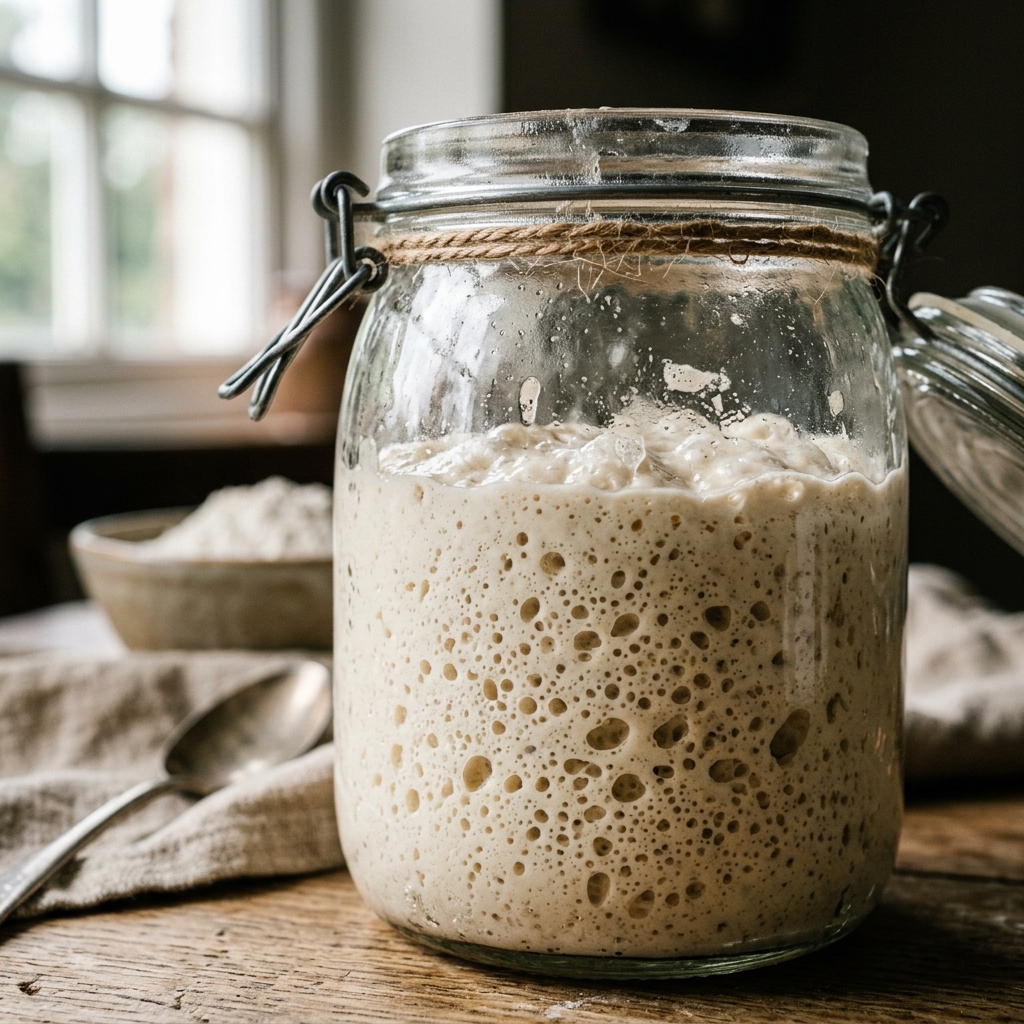
Ancient Yeast Science: The Microcosm of Lievito Madre
The Living Heritage: LAB and Wild Yeast
In the Sicilian baking tradition, the Lievito Madre (Mother Yeast) is treated as a family member—often passed down through generations. Technically, it is a complex symbiotic culture of Lactic Acid Bacteria (LAB) and wild yeasts (mostly Saccharomyces cerevisiae and Candida humilis). Unlike commercial yeast, which offers a singular, rapid lift, the Madre provides a multidimensional transformation of the grain.
The pH Pivot: Acidity and Strength
A healthy Lievito Madre lives at a pH between 3.8 and 4.2. This acidity is not just for flavor; it is a defensive mechanism. It creates an environment where 'bad' bacteria cannot survive, while simultaneously triggering the enzymes that break down phytic acid—making the minerals in the bread biovailable for your body.
Maintaining the Ecosystem
The health of your Madre depends on three technical variables: Temperature, Oxygenation, and the Ash Content of your flour. Using a high-extraction flour like Tipo 2 or Whole Wheat provides more minerals ('ash') which act as buffers and nutrients for the microbes, leading to a more stable and resilient culture.
"The Madre doesn't demand your time; she demands your attention. Listen to the bubbles; they are the language of life."
The Science of Scent: Acetous vs. Lactic
A well-maintained starter should smell like a fresh green apple or creamy yogurt (lactic acid). If it smells sharply like vinegar (acetic acid), it is often a signal that the temperature is too low or the hydration is too high. Balancing these acids is the difference between a bread that is 'sour' and a bread that has 'depth'.
Mamma's Pro Tip: The Water Test
Before mixing your final dough, take a small spoonful of your active starter and drop it into a glass of room-temperature water. If it floats, the carbon dioxide production is at its peak (the 'Leaven' stage), and your Madre is ready to transform the flour into a masterpiece. If it sinks, it needs another feeding and more biological time.
Biological Time vs. Industrial Time
We do not rush the Madre. A typical fermentation in our Cefalù studio lasts 18 to 24 hours. This technical 'long-cold' fermentation allows the bacteria to pre-digest the gluten proteins, which is why many of my guests find they can finally eat bread again without the bloating of industrial loaves.